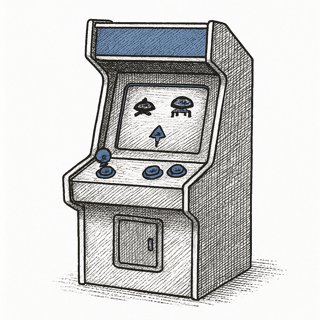
An arcade game with your theme on it
Level 2: two to three weeks, real architecture. Use with: build-a-game, ship-on-github. Resume line when done: Built {project_name}, a browser arcade game — live at {url}
Brief
A one-screen arcade game on a canvas: one verb (dodge, catch, shoot, jump), a threat that speeds up the longer you survive, a score, and a death. The theme comes from your life, so the thing falling from the sky or chasing you across the screen is something you actually care about. Finished means a title menu, a game-over screen with score and restart, a high score that survives a reload, and a URL your friends can open on their own machines and lose at.
Personalize
- Your theme. Skin the classic shape with your world: your dog catching snacks, your bike dodging potholes on your actual street, your band's drummer keeping sticks in the air. If the theme could belong to anyone, pick again.
- The verb. One input scheme, chosen before any code: arrows only, arrows plus one button, or mouse only. Write it in the README and do not add a second scheme later.
- Your playtesters. Two people you can put a laptop in front of this week. Write their names in the README before you start.
Milestones
- One-page design note in the README: the verb, the threat, what ends a run, what the score counts.
- Canvas loop drawing the player, moving under input. Deploy this skeleton the same day.
- The threat spawns and collision ends the run. Death does something, even if it is just a red screen.
- Score ticks up while you live; difficulty escalates on a curve you tuned by playing it yourself, badly, many times.
- End of week one: the full loop works, from start to death to restart, without touching reload.
- Title menu with the game's name and the controls listed; game-over screen shows the score and a restart button.
- High score saved in localStorage and shown on the menu.
- Juice pass: a flash on hit, a sound on death, something that makes dying feel like an event instead of a bug.
- Playtest round one: watch your first named tester play without coaching them. Write down every place they got confused, then fix the worst one.
- Playtest round two with your second tester, tune the difficulty curve from what you saw, add a gif to the README, ship.
Done means
- Live URL anyone can open; the game runs smoothly on a normal laptop
- Complete loop: menu, play, die, see your score, restart, all without a page reload
- High score survives a reload
- Difficulty visibly escalates within the first 60 seconds of a run
- Both named playtesters played it, and at least one thing in the game changed because of what they did or said
- At least 15 commits across at least 10 distinct days, authored by you
- SESSIONS.md has an entry per session, written by you